Guide
Mahjong tiles explained: what the dots, bamboo and flowers mean
Every tile in our prints is drawn to match a real tile, because players notice when one isn't. Here's what we check against: how each suit is laid out, and what the picture tiles mean.
The three suits
A mahjong set has three suits numbered 1 to 9: dots (also called circles or coins), bamboo (bams or sticks) and characters (cracks). There are four copies of every tile. The dots and bamboo are pictures you can count; the characters use Chinese numerals with the character for ten thousand beneath.
Dots
The number of circles is the number of the tile, but the layout matters as much as the count:
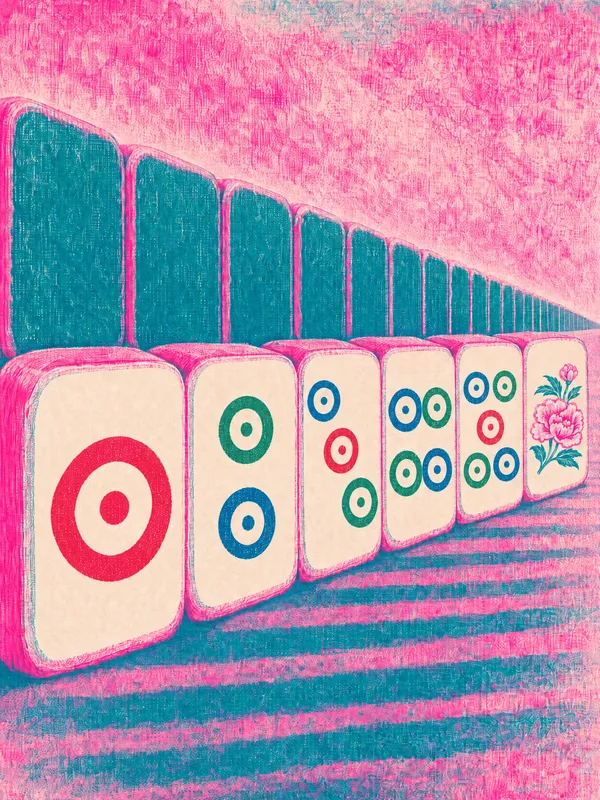
- 1: one large decorated circle.
- 2: two circles, one above the other.
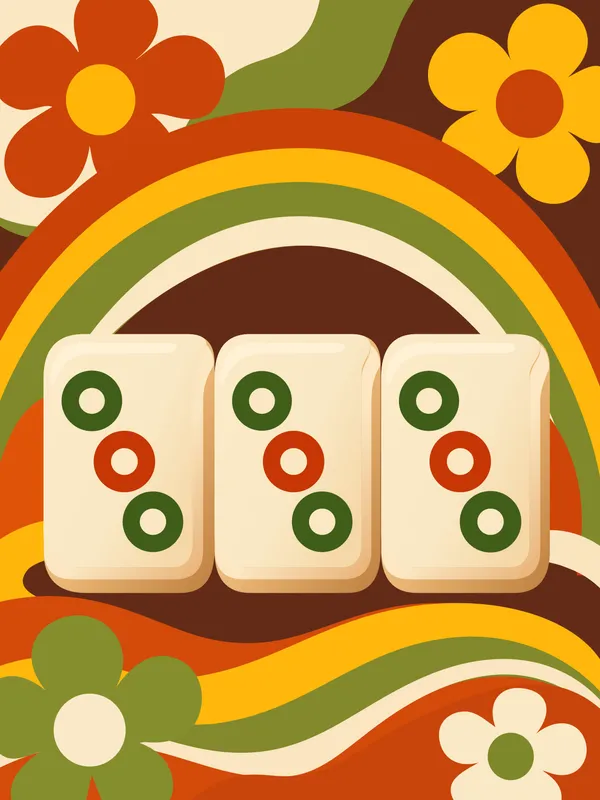
- 3: three on a diagonal, top left to bottom right.
- 4: a square of four.
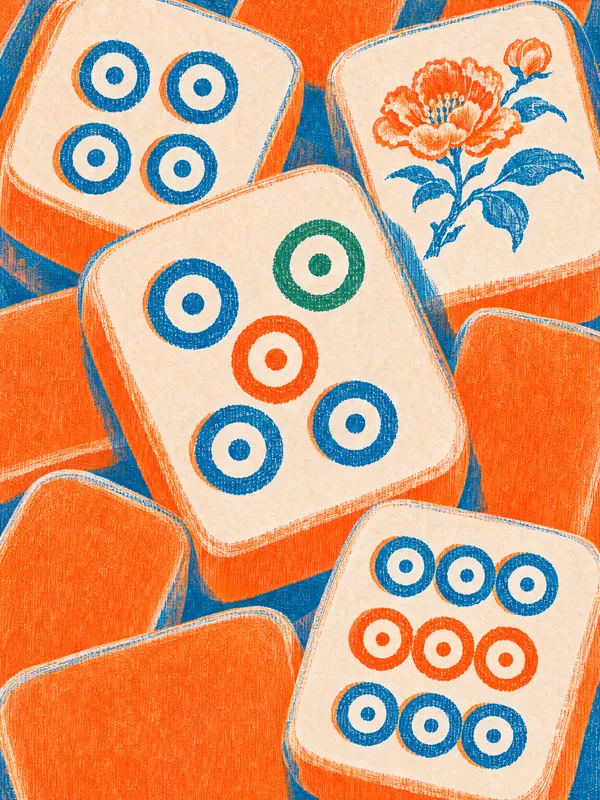
- 5: a square of four with one in the middle, like the five on a dice.
- 6: two columns of three.
- 7: three on a diagonal at the top, then a square of four below.
- 8: two columns of four.
- 9: a grid of three by three.
Bamboo
- 1: a bird, not a stick (see the questions below).
- 2: two sticks, one above the other.
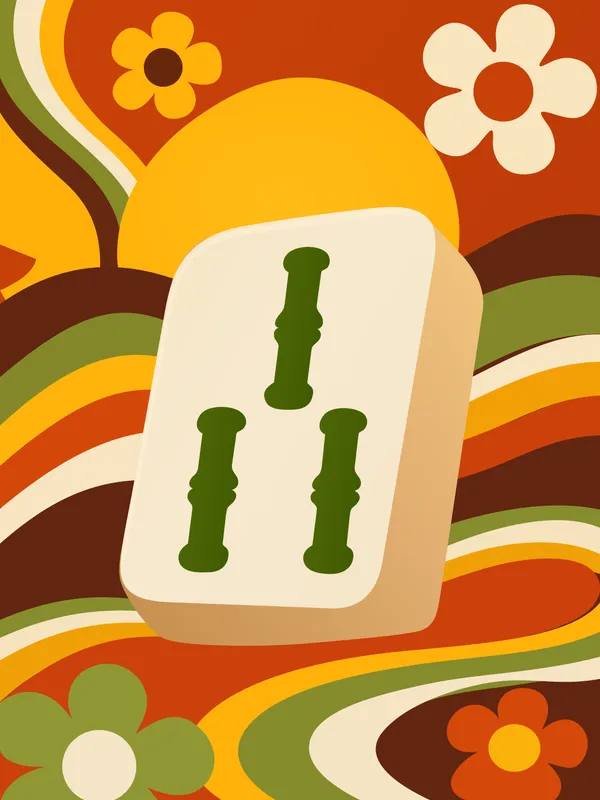
- 3: one stick on top, two below.
- 4: a square of four.
- 5: a square of four with one in the middle.
- 6: two rows of three.
- 7: one on top, then two rows of three.
- 8: four on top and four below, leaning into an M and a W.
- 9: three rows of three.
The most common mistake in mahjong-themed art is sticks lined up side by side on the 2 and 3. On a real tile they're stacked.
-
Bamboo Sunset
From
-

Riso Bams
From
-
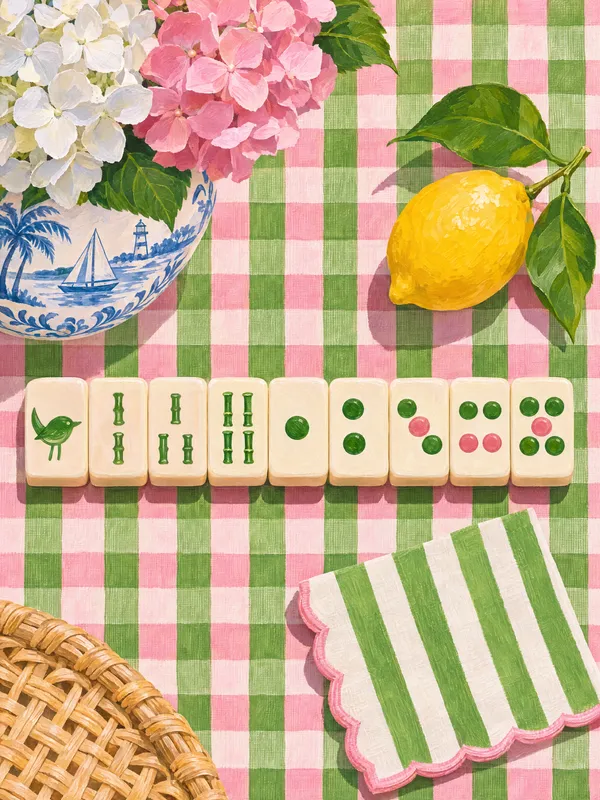
Gingham Table
From
Winds and dragons
The honour tiles: four winds (east, south, west and north) and three dragons (red, green and white). The red and green dragons carry Chinese characters; the white dragon is often a blank or a framed rectangle, which American players call the "soap". We leave these out of our art rather than draw characters inaccurately.
Flowers and seasons
Eight bonus tiles. The four flowers are usually plum blossom, orchid, chrysanthemum and bamboo, the "four gentlemen" of Chinese painting, each linked to a season: plum to winter, orchid to spring, bamboo to summer and chrysanthemum to autumn. The four season tiles show spring, summer, autumn and winter. Designs vary more between sets than any other tiles, which is why they're the most decorated.
-
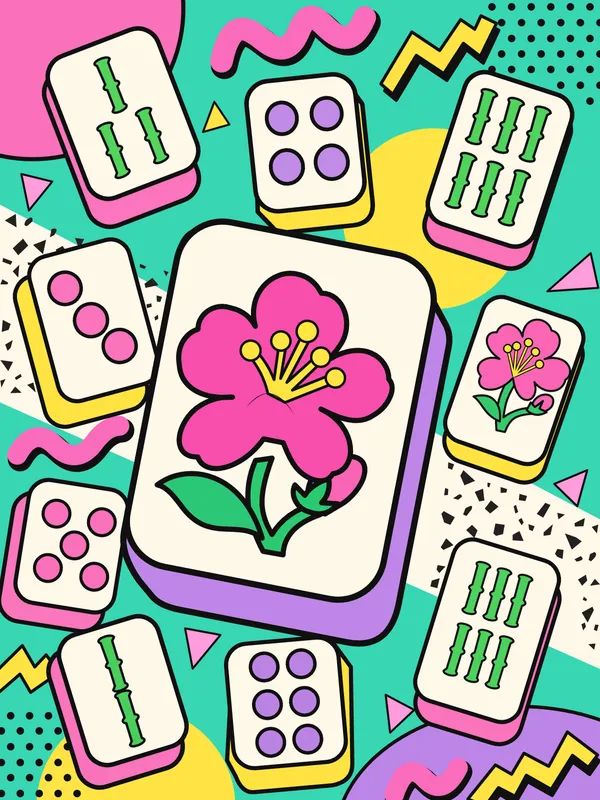
Flower Tile
From
-
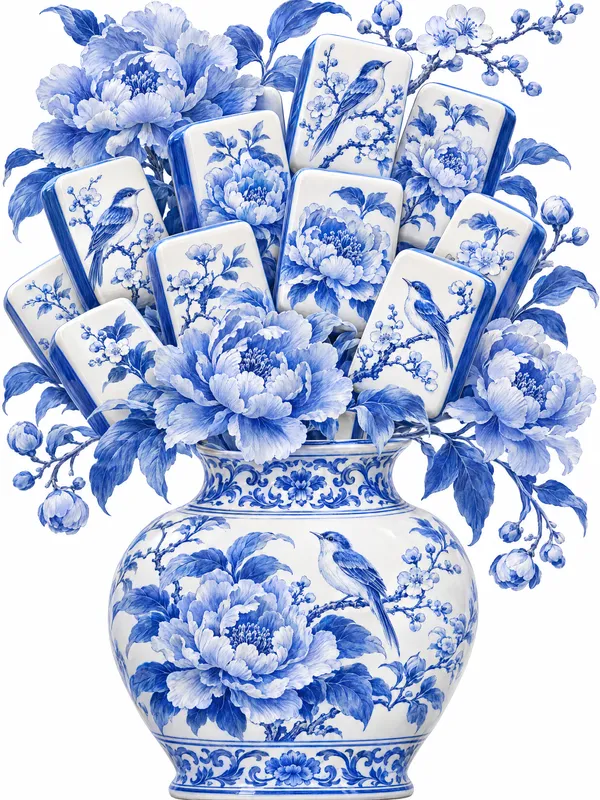
Tile Bouquet
From
-
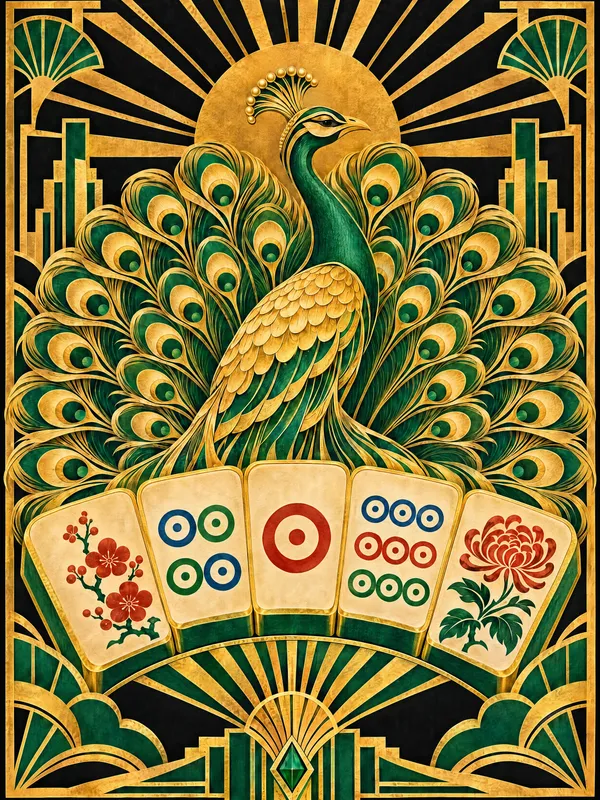
Peacock
From
Questions
Why is the one of bamboo a bird?
Most sets show a bird, often a sparrow or peacock, on the one of bamboo instead of a single stick. One popular explanation is that a lone stick is too easy to alter or confuse, so makers drew a bird instead. Whatever the reason, a single plain stick on that tile looks wrong to experienced players.
How many tiles are in a mahjong set?
A Chinese set has 144 tiles: 108 suit tiles (dots, bamboo and characters, 1 to 9, four of each), 16 winds, 12 dragons and 8 flower and season tiles. American sets add jokers, usually 8, for 152.
What are the flower and season tiles?
Eight bonus tiles. Four flowers, usually plum blossom, orchid, chrysanthemum and bamboo, and four seasons: spring, summer, autumn and winter. In many games you set them aside when drawn and take a replacement tile.